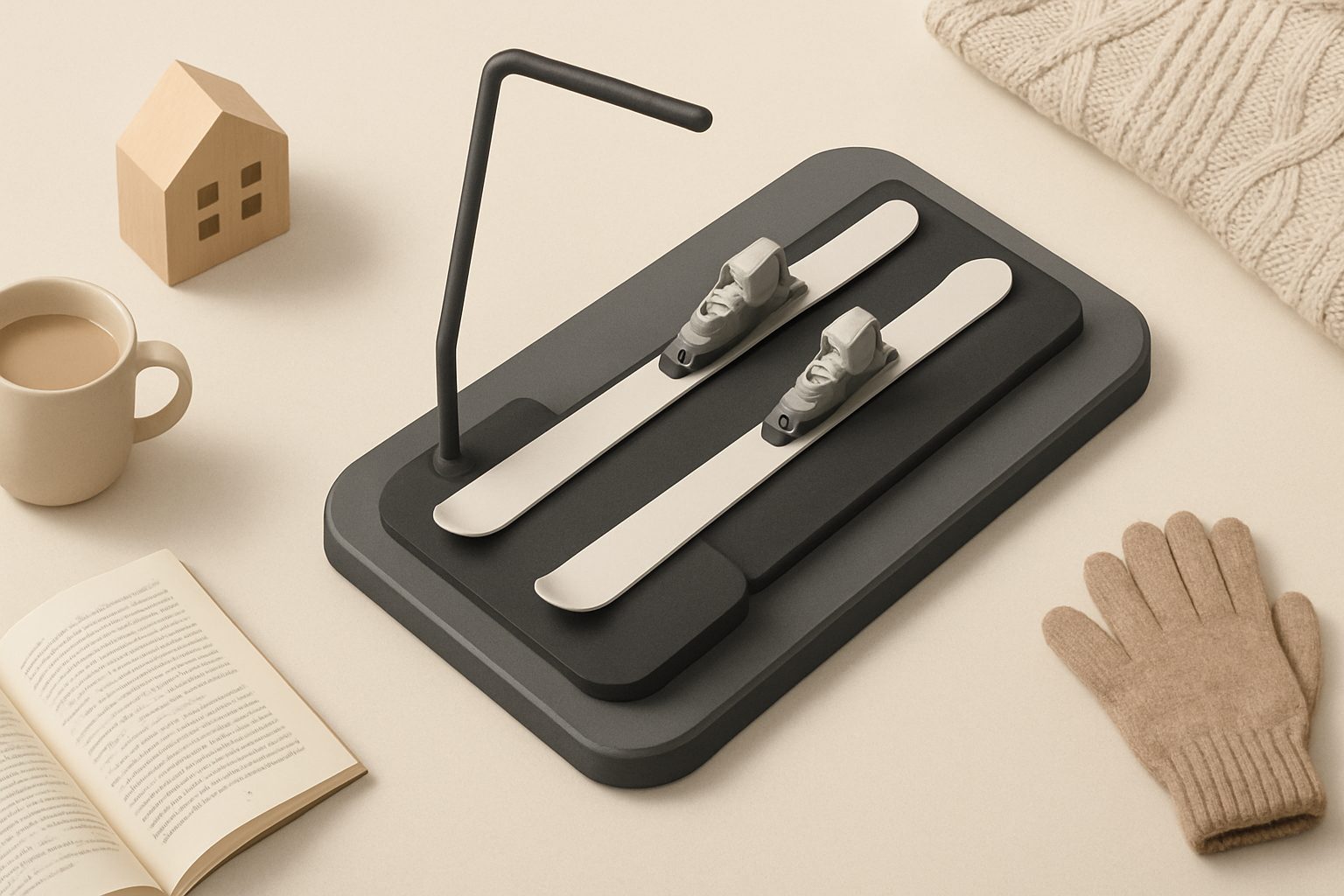
Ski Simulator vs Dry Slope: Pros, Cons & Which Is Better for Off-Season?
Off-season training is non-negotiable if you want to stay sharp between winter trips. But choosing between a home ski simulator and driving to a dry slope isn't straightforward—both have genuine strengths, and both have real limitations. Here's what actually matters when deciding.
Cost Per Session: The Numbers
A dry slope session at a UK facility like Chill Factore (Manchester) or the Artificial Slope in Bristol will run you £25–£45 per hour on average. Add petrol, wear on bindings and bases (dry slopes are abrasive), and occasional coach fees, and a weekly session costs £60–£100.
A home ski simulator requires upfront investment: £2,000–£8,000 for a decent setup (machine, mat, frame). But once installed, sessions are free. Over a year of weekly use, you're paying roughly £40–£150 per session amortised—cheaper than dry slope once the machine pays for itself, usually within 18–24 months if you're genuinely consistent.
The catch: that upfront cost stops most people committing. Dry slopes feel cheaper per session, but they're actually expensive if you only attend sporadically. Simulators reward discipline.
Travel and Time
This is where simulators win decisively. A session at home means no 45-minute drive, no car park queues, no waiting for a slope slot. You train at 6am or 9pm without logistical friction. Dry slope trips eat 2–3 hours including travel and setup.
That convenience matters psychologically. When training requires a weekend logistics mission, you'll do it fewer times. When it's in your garage, you'll use it.
What You Actually Learn
Here's the honest bit: dry slopes and simulators teach different things.
Dry slopes give you real edge control, pressure management, and the physics of turning on an actual friction surface. You're working against tangible resistance, reading fall-line angles, managing real speed. Your body learns what commitment feels like. Nothing replicates that completely.
Simulators train proprioception, line consistency, and rhythm. You're repeating movements under load, building muscle memory for posture and technique. But you're not managing the chaotic variables of a real slope: uneven surfaces, varying friction, edge preparation demands, speed management.
Smart skiers use both. Simulators for high-frequency, focused movement drilling; dry slopes for intermittent reality-checks and nerve system adaptation.
Skill Transfer to Real Slopes
Research on dry slope training (limited, but real) shows modest carryover to alpine conditions—maybe 20–30% improvement in technical performance, less in confidence. Simulators show similar patterns: they improve precision but don't replace slope time.
The best off-season protocol combines both: simulator work 2–3 times weekly for refinement, dry slope once monthly to stress-test fundamentals and confidence.
Seasonal and Weather Factors
Dry slopes operate year-round but are genuinely grimmer in winter: colder, wetter, higher risk of icing (which actually closes many UK slopes). They're also busier during school holidays and summer holidays when kids book lessons.
Simulators work identically in July and January. No weather dependency, no crowds, no seasonal pricing surges.
Space and Setup Reality
Home simulators need space: typically 2m × 2m floor area minimum, ideally 3m length for running start. Loft, garage, or spare room. Noise is manageable (quieter than you'd expect), but vibration transfer through older floors can annoy downstairs neighbours.
Dry slopes require no commitment beyond a drive.
Injury Risk
Simulators are stationary and controlled—lower acute injury risk, but repetitive strain is possible without variation. Dry slopes carry real fall risk and impact injury potential, though UK slopes are well-designed.
If you're injury-prone or returning from physio, simulators are genuinely safer.
Which Is Actually Better?
If you're serious about consistent off-season training—three or more sessions weekly—a simulator is the right choice. The cost advantage compounds, and the convenience barrier disappears. You'll train more, which matters more than training quality.
If you train sporadically or live near a good slope, dry slopes win. You'll use them without friction, and the real-world feedback justifies the cost and travel.
If you're new to skiing or want to build genuine confidence, lean toward dry slopes. You need that real-slope feedback before muscle memory becomes unhelpful habit.
The practical recommendation: Start with a dry slope membership (3–4 sessions, £150–200 total). Work out whether you'll actually commit to regular training. If you do, invest in a simulator and use it as your primary tool. If dry slopes feel like occasional treats rather than regular practice, a simulator will sit unused—don't buy one.
Setup Considerations
If you do buy a simulator, budget properly: machine cost is only half the story. You'll need:
- Solid flooring or vibration mat
- Adequate ventilation (simulators generate heat)
- Space for a proper run-in
- A full-length mirror (essential for feedback)
- Likely a second pair of skis if you want to switch frequently
These add £500–£1,500 to the base machine cost.
The Honest Conclusion
Simulators aren't a dry-slope replacement—they're a complementary tool that only works if you use them. Dry slopes are genuinely better for acute skill improvement and confidence. But simulators excel at frequency, consistency, and turning off-season training friction.
Most dedicated off-season skiers end up using both, with simulators handling the bulk of midweek volume and dry slopes providing quarterly reality checks. That combination is expensive (£150–250 monthly), but it's also what actually improves your skiing between winters.
If you're leaning toward a simulator, the next step is finding the right machine for your space and budget. We've broken down the best UK options, cost-per-use data, and how to avoid common setup mistakes—worth reading before you commit.
More options
- Lateral Ski Slide Trainers & Ski Simulator Machines (Amazon UK)
- Ski Balance & Rocker Boards (Amazon UK)
- Ski Fitness Slide Boards (Amazon UK)
- Ski Resistance & Plyometric Training Equipment (Amazon UK)
- Protective Floor Mats for Home Gym / Simulator (Amazon UK)