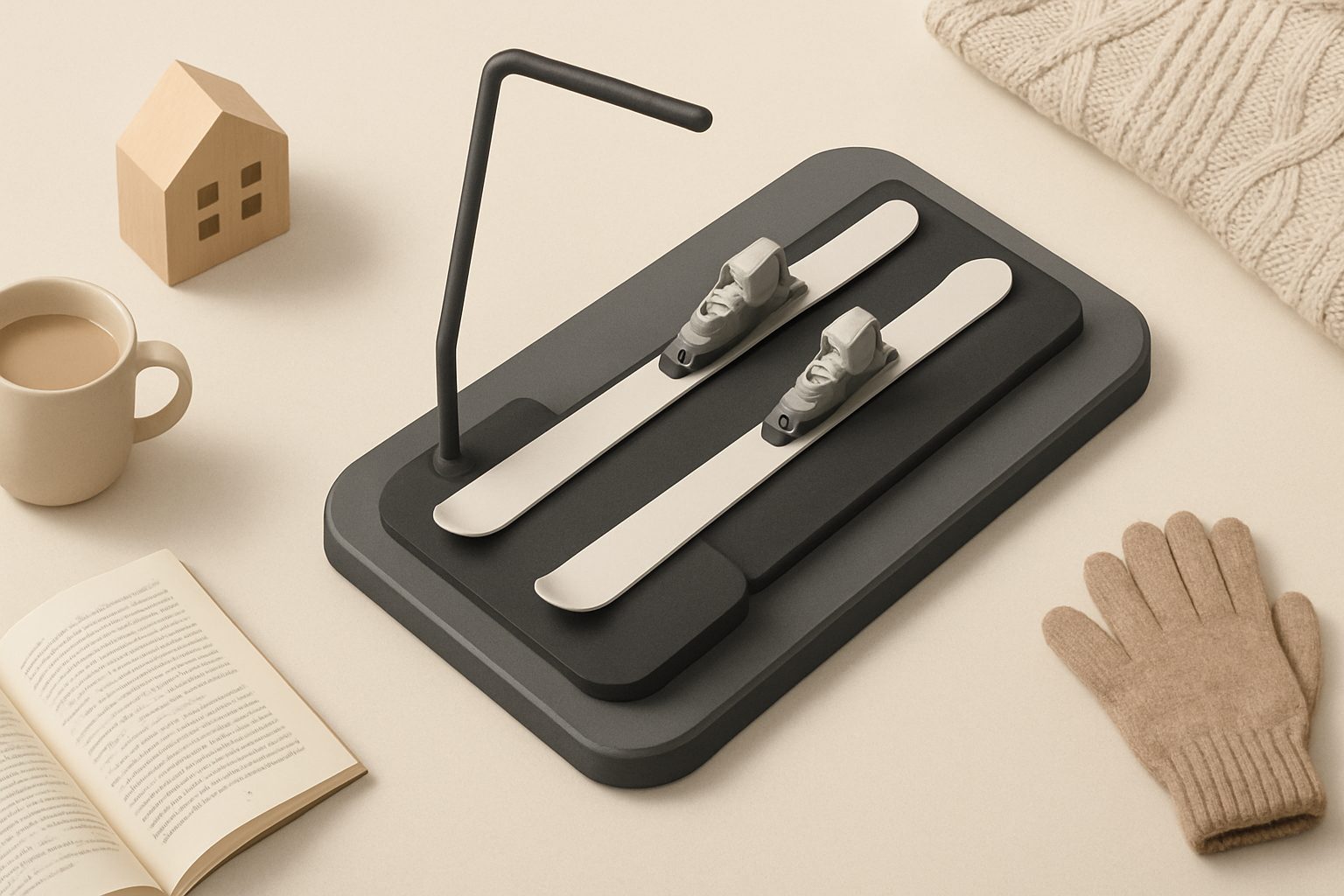
10 Ski Simulator Exercises & Drills to Improve Your Technique at Home
Ski simulators offer year-round training for technique that usually takes a mountain season to develop. Whether you're using a balance board, slide trainer, or dedicated simulator, the drills below target the movements that matter most: edging pressure, angulation, and rhythm. These exercises build muscle memory and proprioception without snow.
1. Basic Edge Transitions
Stand with feet shoulder-width apart and shift weight smoothly from one edge to the other in slow, deliberate movements. Lead with your ankles and knees—your hips should stay relatively centred. Spend 2–3 seconds on each edge. This teaches the feel of loading the new edge before committing your weight. Do three 30-second sets, gradually increasing speed.
2. Angulation Drills
With feet planted, practise inclining your upper body downhill while keeping your pelvis stacked over your knees. Your shin and thigh should create roughly a 90-degree angle when you're in proper position. Hold each side for 10–15 seconds, rest, and repeat. Angulation is what separates athletic skiers from stiff ones—it lets you maintain edge contact through carved turns without relying on pure leg strength.
3. Pole Timing Exercises
If your simulator allows arm movement (or you're simply practising the motion), practise synchronized pole plants with your edge changes. Plant the pole as your skis release from the old turn, well before you commit to the new one. Timing develops rhythm and helps with mogul technique. Start stationary, then add it to your transitions for integrated practice.
4. Pressure Control on the Simulator
Using weight shifts, practise building and releasing pressure smoothly rather than dumping all your weight at once. Start with a series of short turns (2–3 seconds each), focusing on feeling the board flex under pressure. Then extend to longer turns (5–6 seconds) where you maintain constant pressure through the arc. This differentiates between good skiers and excellent ones.
5. Fall Line Discipline
Mark an imaginary fall line down your simulator. Practise staying in that line through multiple linked turns without drifting uphill or downhill. This drill teaches line awareness and consistent turn initiation—critical for steep terrain. If you're using a slide trainer or balance board, you'll naturally feel when you've drifted.
6. Mogul-Style Absorption
Execute short, punchy turns with exaggerated absorption—knees compressing as you land on each new edge, extending as you launch into the next turn. This builds the dynamic leg strength mogul skiing demands. It's intense; do three sets of 10 turns, rest, and repeat.
7. Carving Arcs Without Skidding
Focus entirely on holding an edge without any sideways slip. If your simulator provides feedback through movement or resistance, use it. The goal is pure edge angles and constant radius. Practise both short, tight carved turns and longer, sweeping arcs. Many skiers skid without realising it; this drill develops the proprioceptive awareness to avoid it.
8. Weight Distribution Front-to-Back
Intentionally shift weight between your front and back foot across different turns. Spend one set focusing weight forward (ball of the foot), the next set centred, the next back (heel). Feel how each affects turn initiation, speed, and control. Front-weighted feels responsive; back-weighted feels stable at speed. Knowing when to favour each is crucial.
9. Cross-Over Timing for Steep Terrain
Practise pre-turning (initiating the next turn before your skis have fully finished the previous one). This stacked, rhythmic timing is essential for steep slopes where you can't afford delays between turns. If your balance board or slide trainer allows, practise narrowing your stance slightly—steeper terrain demands a narrower platform for precision.
10. Recovery Movements
Deliberately overshoot your turns slightly, then recover with a single corrective turn. This trains composure and weight control when things go slightly wrong—practical for real skiing. Then repeat a series of perfectly linked turns to ingrain the muscle memory. Mixing imperfection with precision builds adaptability.
Making the Most of Your Practice
Structure your sessions around one or two drills per day. Warm up with basic transitions, spend 10–15 minutes on the day's focus, then cool down with rhythmic linked turns. Use a mirror if possible; video even better. You should immediately feel fatigued in your glutes, quads, and core—this is the right intensity.
Equipment choices matter. A balance board demands constant micro-adjustments and builds ankle stability. A slide trainer with a slicker surface teaches edge pressure and carving discipline. Dedicated home simulators with foot platforms offer the most sport-specific feedback but aren't essential for these drills.
Consistency beats intensity. Three 20-minute sessions weekly for six weeks will yield more improvement than one heroic three-hour session. You'll notice sharper turn initiation, better edge awareness, and stronger rhythm the next time you're on snow.
More options
- Lateral Ski Slide Trainers & Ski Simulator Machines (Amazon UK)
- Ski Balance & Rocker Boards (Amazon UK)
- Ski Fitness Slide Boards (Amazon UK)
- Ski Resistance & Plyometric Training Equipment (Amazon UK)
- Protective Floor Mats for Home Gym / Simulator (Amazon UK)